
Mango Madness
Mango season doesn’t really arrive with a calendar date in The Bahamas. It arrives with a scent. You catch it before you see it – that warm, floral sweetness drifting from a yard tree, or from a paper bag on a kitchen counter that someone insists is “not ready yet” (it always is). The first ripe mango of the year is rarely eaten politely. It’s eaten standing up, juice running down wrists, while someone nearby offers the most useful advice of the season: lean forward.
Mangoes travelled a long way to become an island staple, moving from South Asia through trade routes into the Americas. But once they took root here, they stopped feeling borrowed. They became yard fruit and school-break fruit, the thing neighbors swap over fences, the reason a towel stays permanently in the car during summer. In other words, mangoes became ours.
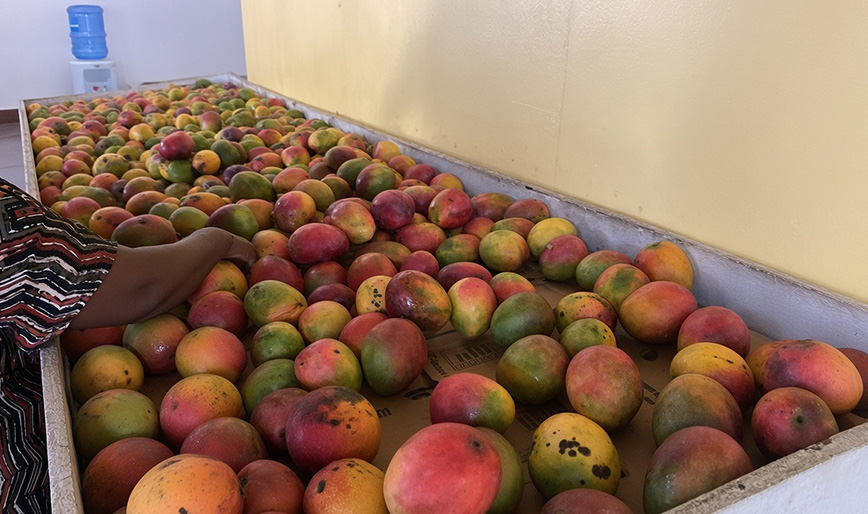
Part of the obsession is variety. Heritage “native” mangoes, like the long, golden “Number 11” and the kidney-shaped types, carry the taste many Bahamians swear is the only real mango taste. Then there are the better-known imports: Haden, Kent, Tommy Atkins, and others that arrived through travel and agricultural work abroad. Between the two sits the great backyard mystery – seedlings. Plant a seed and you might get something fibrous, something silky, or something so good it earns a nickname and a reputation before it ever earns a label.
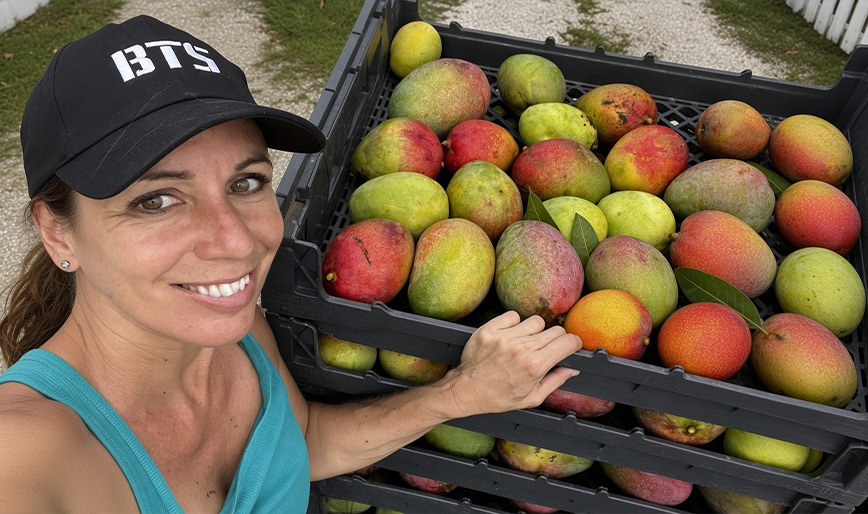
At the Maillis Farm, mangoes are approached with the seriousness usually reserved for heirlooms. Head of the family, Pericles Maillis, describes the orchard as a kind of living catalogue. It features trees planted intentionally, varieties brought from abroad, and seedlings that appeared because nature is rarely content to follow a plan. What looks like easy abundance, he says, is really the outcome of deliberate choices and meticulous attention.
On many Bahamian farms, the first challenge is simply making a place for roots. Where rock sits close to the surface, holes have to be dug down to soil, then filled, watered, and watched until a young tree decides it’s staying. Mangoes reward this kind of persistence slowly, then suddenly, when a once-spindly sapling becomes the tree everyone asks about each year.
Maillis Farm now grows more than 65 mango varieties, including a number of natural cross-pollinations. Those “happy accidents” are created when insects and animals move pollen from bloom to bloom. One standout is the “Maillis Magnum,” a large, brightly colored fruit believed to be a cross of popular types.
Harvest is a group effort. Families living on the land pick, sort, and wash fruit together, and children learn early that mango season is everyone’s season.

Of course, mangoes don’t grow on good intentions alone. A hard storm can knock off blossoms and erase a season. A hurricane can topple trees that took years to establish. Farmers prune to meet the wind, cut back young trees to protect roots, and when a mature tree falls, try to lift and nurse it back, because waiting for a mango tree is one thing; starting over is another.
Mango season usually runs from late May through September, with different varieties ripening in succession – early fruit that’s bright and sharp, mid-season mangoes that drip honey, late varieties that finish with depth and perfume. It’s a short window, which may be why it feels so loved.
00 Comment
Leave a comment