
Chasing Pink: A Flamingo Safari Story
If your kind of adventure includes exploring hidden backcountry in an off-road vehicle and chasing unforgettable wildlife moments, pack your bags and head south to Inagua’s Outback.
Packing guide
Bring binoculars and a quality zoom lens to discreetly capture these shy creatures.
Pack a jacket or light sweater for the somewhat chilly pre-dawn temperatures, something that can easily be shrugged off once the Inagua sun climbs higher and the Inagua heat sets in.
Be mindful of the season. Larger flamingo populations gather between November and June, though smaller flocks remain visible year-round.
The hunt begins before dawn. Bright headlights slice through the ink-black Inagua morning as our off-road truck rattles across rough, unpaved roads, weaving between mangroves.
silhouetted by a fading moon and a rising sun. We're after something rare, famously Bahamian, yet intriguingly elusive: Caribbean flamingos in the wild.
Inagua feels like the edge of the Earth. Far from the polished Bahamas tourism scene, it’s rugged, authentic, and spectacularly remote. Known as the birding capital of The Bahamas, this island promises travelers a close encounter with one of nature's most dazzling sights.
There are knowledgeable local guides on the island who will take you deep into the island's untouched wilderness, delivering a genuine wildlife experience.
There’s no predetermined route or curated wildlife encounter, just you, your camera, and the excitement of pursuing a bird as fickle as it is fascinating. I've been to Inagua enough to know that patience is essential when navigating this expansive backcountry. Sometimes luck is on your side, and the flamingos appear mere minutes after leaving Matthew Town. Other times, hours may pass with only distant glimpses.
A flamingo safari typically begins at sunrise, the ideal moment to witness these birds at their most active and vivid. As you venture deeper into flamingo territory, the landscape becomes increasingly surreal. Flamingos aren’t restricted to any one spot, they’re frequently sighted along roadsides, wading in shallow pools or freshwater ponds scattered throughout the island. Their location constantly shifts depending on rainfall and the operation of the Morton Bahamas salt factory’s pumps, which move water around Inagua’s interior. The vast 287-square-mile Inagua National Park is where large flocks gather by the thousands, especially during breeding season. Just don’t expect to spot flamingos strolling casually through Matthew Town, they prefer a respectful distance from civilization.
Driving or walking into flamingo territory commands silence. Instinctively, we keep the music low, speak only in whispers, and carefully slow our vehicles to a crawl when a flock is spotted. Flamingos are notoriously skittish and easily startled into flight. You’re guaranteed to scare them away once they think you’re close.

When flamingos do get spooked, their escape is dramatic, yet graceful. They lift off, wings beating steadily, gliding just above the water's surface, typically only five or six feet high, before settling again. On longer journeys, however, you'll see them climb higher into the sky, forming striking pink ribbons against the blue.
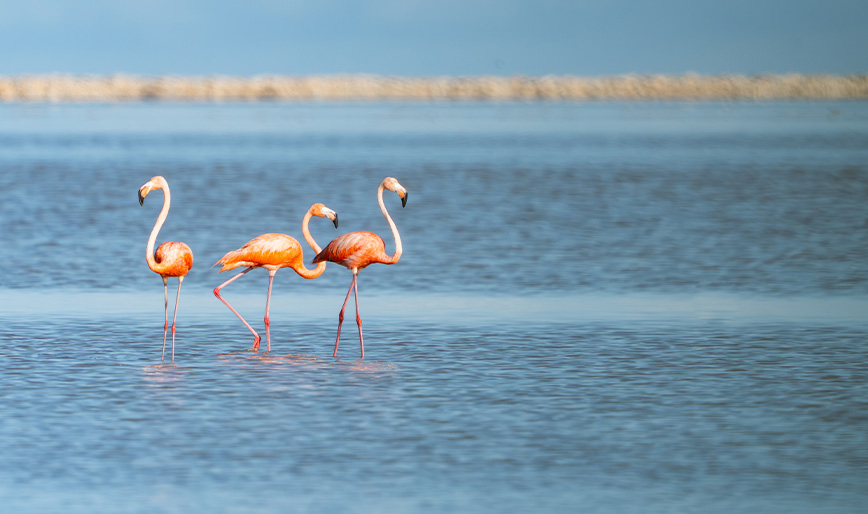
When you finally spot them, it’s pure magic. Observing these flame-colored birds gracefully wading, preening their feathers, feeding, or performing synchronized dances is captivating.
Witnessing your first flock of flamingos taking flight is a wild, fleeting spectacle. It’s a brief, powerful moment that captures the true essence of the safari.
00 Comment
Leave a comment